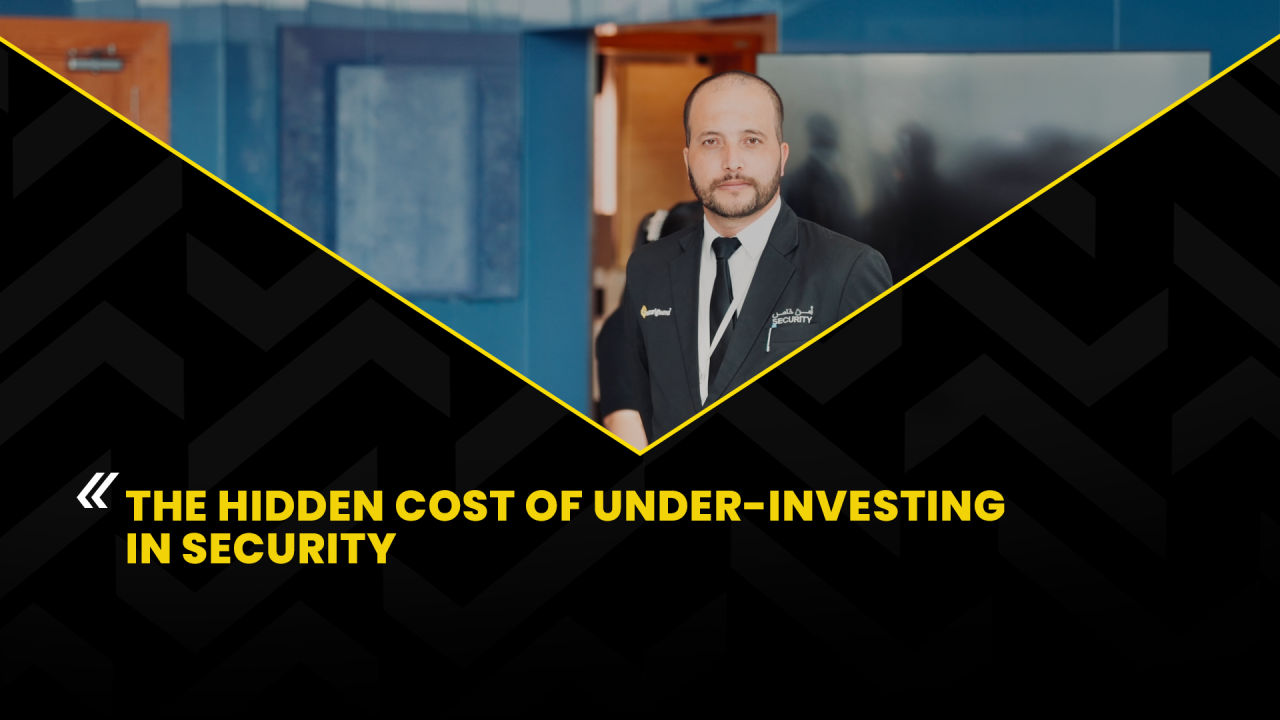
Cutting corners on security often costs more in the long run than the investment itself.
The False Economy of Minimal Security
When budgets are tight, security is often one of the first areas businesses look to trim. On paper, reducing guard hours or skipping a proper risk assessment looks like savings. In practice, it frequently shifts cost elsewhere, into theft, liability, downtime, or reputational damage that far exceeds what was saved.
Incidents Are Rarely the Only Cost
A single security incident, a break-in, an unauthorized visitor, an unmanaged emergency, rarely stays contained to the moment it happens. There’s often disruption to operations, time spent on investigation and recovery, and a lasting effect on how safe employees, tenants, or customers feel afterward.
Rebuilding that sense of safety is far more expensive, and far slower, than maintaining it in the first place.
Under-Resourced Security Creates Silent Risk
Under-investing doesn’t always look dramatic. It can look like a single guard covering a site that needs two, outdated access permissions no one has reviewed, or a patrol schedule that’s more theoretical than real. These gaps often go unnoticed, until they don’t.
Security as a Long-Term Investment
Businesses that treat security as an ongoing investment, rather than a reactive expense, tend to avoid the larger costs altogether. Properly staffed, well-trained security teams help prevent the incidents that are expensive to recover from.
At SecuriGuard Middle East, we help businesses right-size their security investment, matching coverage and training to actual risk, so protection is neither excessive nor, more critically, insufficient.